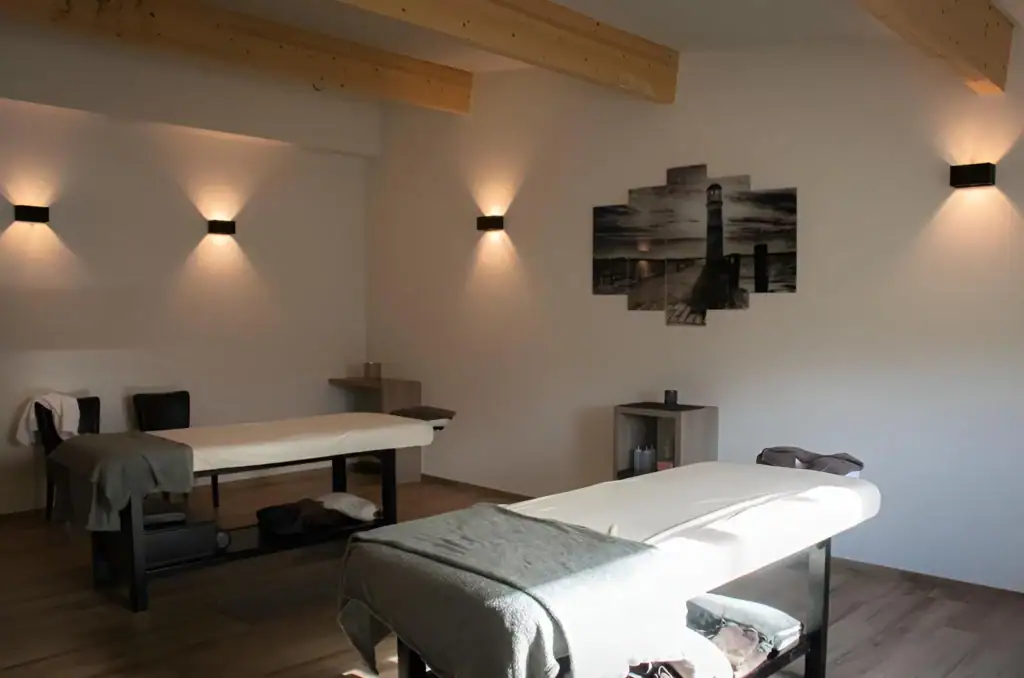
We often think of massage as a pleasant luxury, a moment of comfort we treat ourselves to from time to time. Yet science has been revealing for several decades that the effects of massage are profound, measurable and lasting — far beyond the feeling of immediate relaxation.
A direct impact on the nervous system
Therapeutic touch activates the parasympathetic nervous system, the one that governs rest and recovery. Within just a few minutes of massage, cortisol levels — the stress hormone — decrease by an average of 30%, while serotonin and dopamine levels increase significantly. This hormonal rebalancing is not short-lived: regular sessions lastingly modify the body’s response to stress.
This is why massage is increasingly prescribed as a therapeutic complement in the management of anxiety, insomnia and even certain forms of mild depression.
Blood circulation and lymphatic drainage
The pressures and movements of massage stimulate blood flow, improving the supply of oxygen and nutrients to every cell in the body. This effect is particularly beneficial for people who spend long hours sitting, in whom peripheral circulation tends to slow down.
The lymphatic system, which unlike the blood system has no pump of its own, also benefits from massage. By manually activating lymphatic circulation, massage promotes the elimination of metabolic waste and supports the proper functioning of the immune system.
Relieving chronic tension
Our current lifestyles — screens, prolonged postures, mental load — create muscular tensions that accumulate silently. The upper back, neck, shoulders and lower back are the most frequently affected areas. Without intervention, these tensions can develop into chronic pain that affects quality of life on a daily basis.
A targeted massage can release these tensions by working on the fascia, the connective tissue membranes that surround the muscles. Kneading and deep pressure techniques reactivate local circulation, soften the tissues and restore joint mobility.
Massage as a ritual of reconnection
Beyond the physical dimension, massage offers a rare space in our modern lives: one where you do nothing other than receive. No notifications, no decisions to make, no demands. This return to bodily presence, this reconnection with physical sensations, is in itself an act of deep care.
In the setting of a private spa like Thermes de Noirmont, this dimension is amplified by the total absence of strangers. You can fully let go, without restraint, in an environment designed exclusively for your comfort.
How often should you get a massage?
For general wellbeing maintenance, a monthly session is enough to sustain the cumulative effects of massage. In cases of chronic tension, prolonged stress or sports recovery, a fortnightly rhythm will be more appropriate. The key is regularity: the body gradually learns to relax more quickly and more deeply with each session.